Why English Activities for Kids Fail With Ages 4-8
Why English Activities for Kids Fail With Ages 4-8
These activities can look promising and still fail with a class of 4- to 8-year-olds because they depend on skills younger children are still developing.
Adding colors or cartoons to an activity designed for older learners doesn't change its developmental demands.
I know how frustrating it is to prepare a lesson carefully, only to watch children lose interest, goof off, or ask to go home. That reaction doesn't automatically mean the activities are poor, the children dislike you, or you need to prepare more.
I would start by looking at what those activities ask children to do and whether those expectations match their stage of development.
Key Takeaways
Activities designed for older children may depend on reading, writing, working memory, and rule-following skills that younger learners are still developing.
Games need an appropriate place in the lesson, with attention to their duration, competitiveness, and opportunities for understanding English.
Repeating words and fixed sentences can keep children occupied without giving them a meaningful role in communication.
I plan for children's linguistic, cognitive, physical, social, and emotional development rather than concentrating on English alone.
Alternating movement with calmer activities and making communication understandable helps children participate, feel capable, and remain motivated.
Check out my latest YouTube video where I talk all this:
Why English activities for kids can fall flat
An activity can seem ideal during preparation and produce the same disappointing response as everything that came before it. The children become distracted, participation fades, and the time spent preparing feels wasted.
I understand why that leaves teachers frustrated. When every new activity produces a familiar result, it's easy to assume that finding another game or worksheet will solve the problem.
Much of the material available, however, was created for older children. Changing its appearance doesn't necessarily change the abilities children need to participate.
"The skills younger learners are still developing
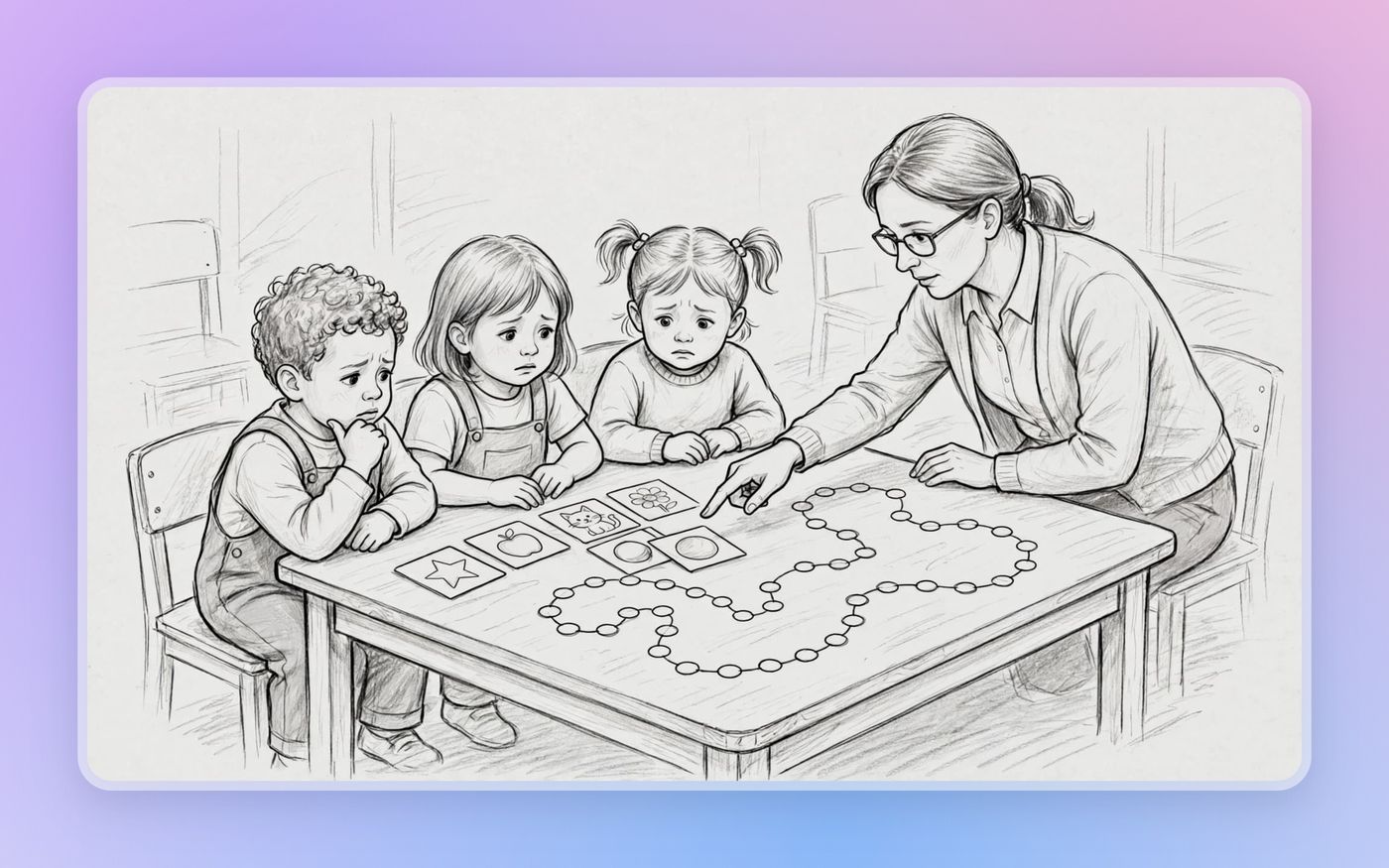
The children I work with are approximately 4 to 8 years old. Compared with older learners, they have less developed working memory, and many aren't yet able to read and write.
Their ability to understand rules, remember them, and follow them throughout a game is also developing. Even understanding that a game has rules everyone is expected to follow can be part of the learning process.
Language itself contains rules. When an English activity also requires children to manage complicated game rules or unfamiliar classroom expectations, there may be more involved than they are ready to handle.
I look at these school-readiness skills before deciding whether an activity is suitable, rather than assuming that a younger-looking version will work.
Why games shouldn't take over the lesson
I agree that children learn through play. Games have a place in English lessons, but putting games first can make it harder to meet younger children's needs.
Younger learners have shorter attention spans and need to change activities more often. One long game can take up most of a lesson without offering the range of participation and understanding I want children to experience.
Enjoyment matters, but a list of "Fun English Games for Kids" is only a starting point. I also consider each game's length, purpose, and how children participate.
Competition can change the experience of play
Younger children generally play for the pleasure of playing, while older children may place more importance on competition. A strongly competitive younger child may reflect an emphasis on winning at home or behavior observed in older siblings.
When a game becomes too competitive, some children feel frustrated or anxious instead of enjoying it. They may lose interest and stop participating. Simon Says, for example, is a short movement game that focuses on listening and following simple instructions, without making winning the goal.
I keep that distinction in mind when choosing games. The activity needs to support children's involvement without letting the pressure to win interfere with their motivation to learn.
Repeating sentences isn't the same as communicating
A lesson can appear active because children are speaking, even when their role consists mainly of repeating what the teacher says. Fun grammar games for kids can still rely on fixed phrases, giving children little reason to understand and respond to meaning.
Familiar examples include "How are you?" followed by "I'm fine," or questions such as "What time is it?" and "What is your name?"
Those expressions are useful, but they aren't the only ways to communicate those meanings. Someone might ask "Who are you?" rather than "What is your name?" or "Do you have the time?" instead of "What time is it?"
Fixed phrases can hide gaps in understanding
A child may remember a whole sentence as one unit, much as they remember a single word. Producing that sentence doesn't necessarily mean they understand its parts or recognize another way of expressing the same idea.
A child can repeat a complete sentence while understanding it only as one fixed chunk.
My goal is for children to acquire the structure of English rather than depend entirely on memorized exchanges. I want them to understand language well enough to recognize meaning beyond the exact wording they have practiced.
That requires more than asking children to repeat a phrase whenever I give them a cue.
Keep teacher talk focused and understandable
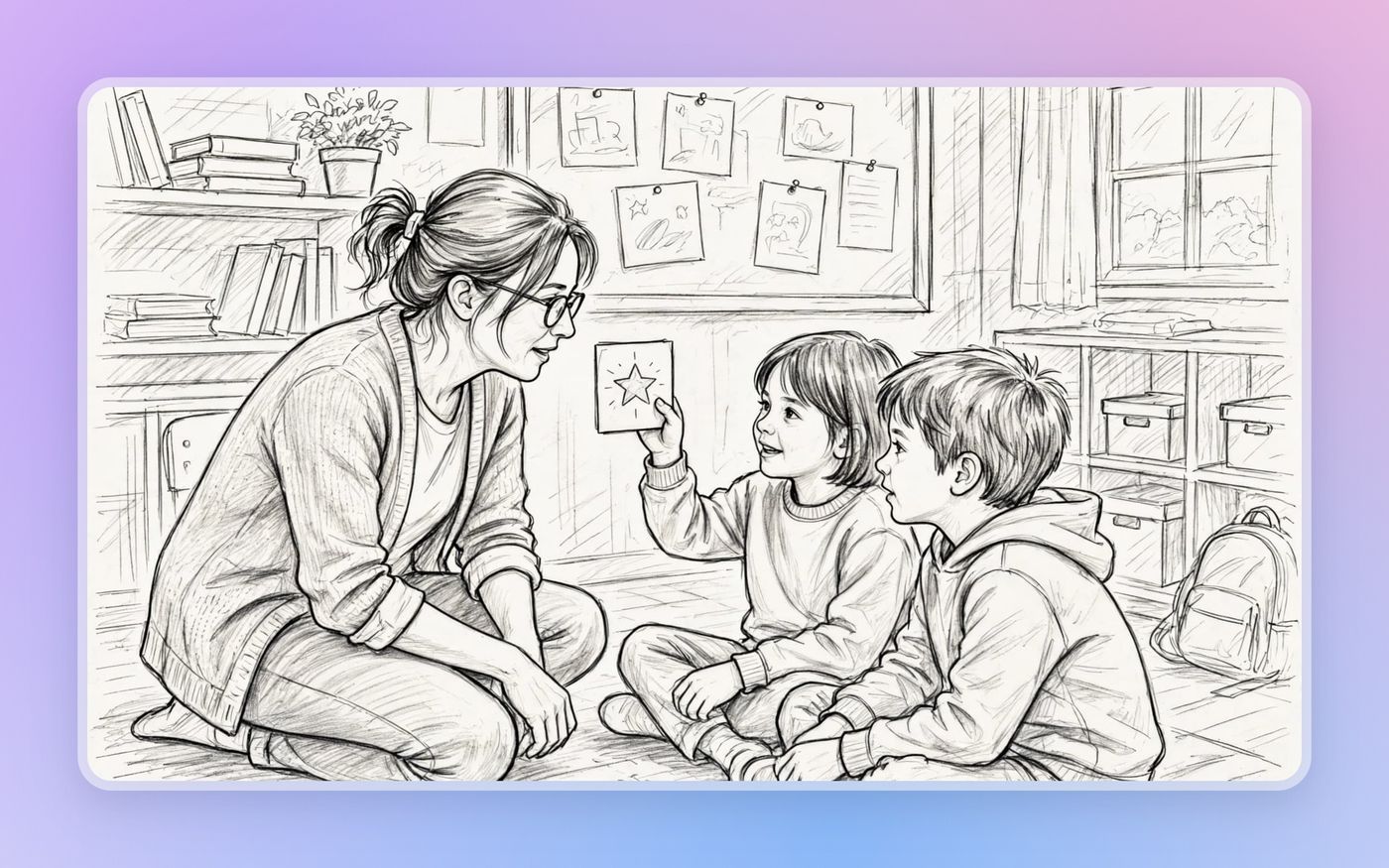
When I say teachers need to stop talking so much, I mean reducing the speech that makes lessons passive or difficult to follow. English teachers need to speak, but children also need to understand what they hear.
It's easy to continue talking after an instruction or explanation is complete. Children can quickly tune out when they don't understand the extra language.
I keep classroom language focused on the task, with meaning children can follow and respond to, and give brief, clear instructions so children know what to do. An extended explanation offers little benefit if children have already lost track of it.
My free guide, 7 Red Flags in a YL EFL English Lesson Plan, identifies lesson-planning habits to look out for when preparing activities for young learners.
How passive participation leads to boredom
Children need an active role in understanding as well as speaking. Listening to a teacher for long periods and occasionally repeating a word gives them little involvement in the exchange.
Endless repetition can feel like talking to a wall. There is no real response to what the child means, and little reason to continue communicating.
I compare communication to ping-pong: one person says something, the other understands and responds, and the exchange continues. Each person has a role in making meaning.
Boredom can come before classroom disruption
When that exchange disappears, children can begin to feel like parrots. They are producing sounds without experiencing the back-and-forth that makes language useful.
Boredom often comes before classroom chaos. Children who are no longer involved may tune out or create behavioral difficulties that make the lesson even harder to manage.
I therefore look at participation before treating disengagement as a need for more entertainment. Children need a meaningful part in the lesson, rather than a longer sequence of things to repeat.
Plan for the whole child
Young learners are developing linguistically, cognitively, physically, socially, and emotionally. I can't separate the English lesson from those areas of development and expect children to participate successfully.
Activities for learners should support children's development across these areas while giving them chances to encounter English. Planning only for language leaves out much of what affects a child's ability to engage.
This approach is consistent with NAEYC's developmentally appropriate practice guidance, which places children's development at the center of teaching decisions.
Language develops alongside other abilities
The EIF Yellow Stage follows this approach for children approximately 4 to 8 years old. Meaningful, play-based experiences bring English together with children's physical, social, emotional, and cognitive development.
Activities can be simplified or extended to match children's developmental needs, including in mixed-age groups. A child's Learning Style isn't a fixed category, so offer different ways to participate, such as speaking, moving, drawing, or pointing.
I want English learning to support children's wider development. Their attention, memory, movement, social interaction, and confidence all matter in a lesson. English reading for kids can develop gradually.
Give games a language purpose and vary the rhythm
Keeping games in a lesson doesn't mean making every activity a game. When choosing ESL activities for kids, I ask whether children understand and use English while playing. I also consider whether each game suits them and fits alongside other experiences.
A game can be enjoyable and still offer limited language learning. The key is whether children understand the language and use it with meaning.
Understanding comes before independent language production
I place particular importance on games that help children understand the language. Repeating a word is relatively easy, but producing language with meaning requires understanding first.
The comparison I use is learning to float before learning to swim. Children need that foundation before they can use language more independently.
I Spy and games such as Charades or Pictionary can show what children understand, as long as the language and rules are manageable for the group. Interactive read-alouds and puppet storytelling, if done correctly, can also give children a meaningful reason to listen and respond.
When reviewing a game, I look beyond whether it prompts an English answer. I consider whether children understand the language involved and whether their response has meaning.
Alternate movement with calmer activities
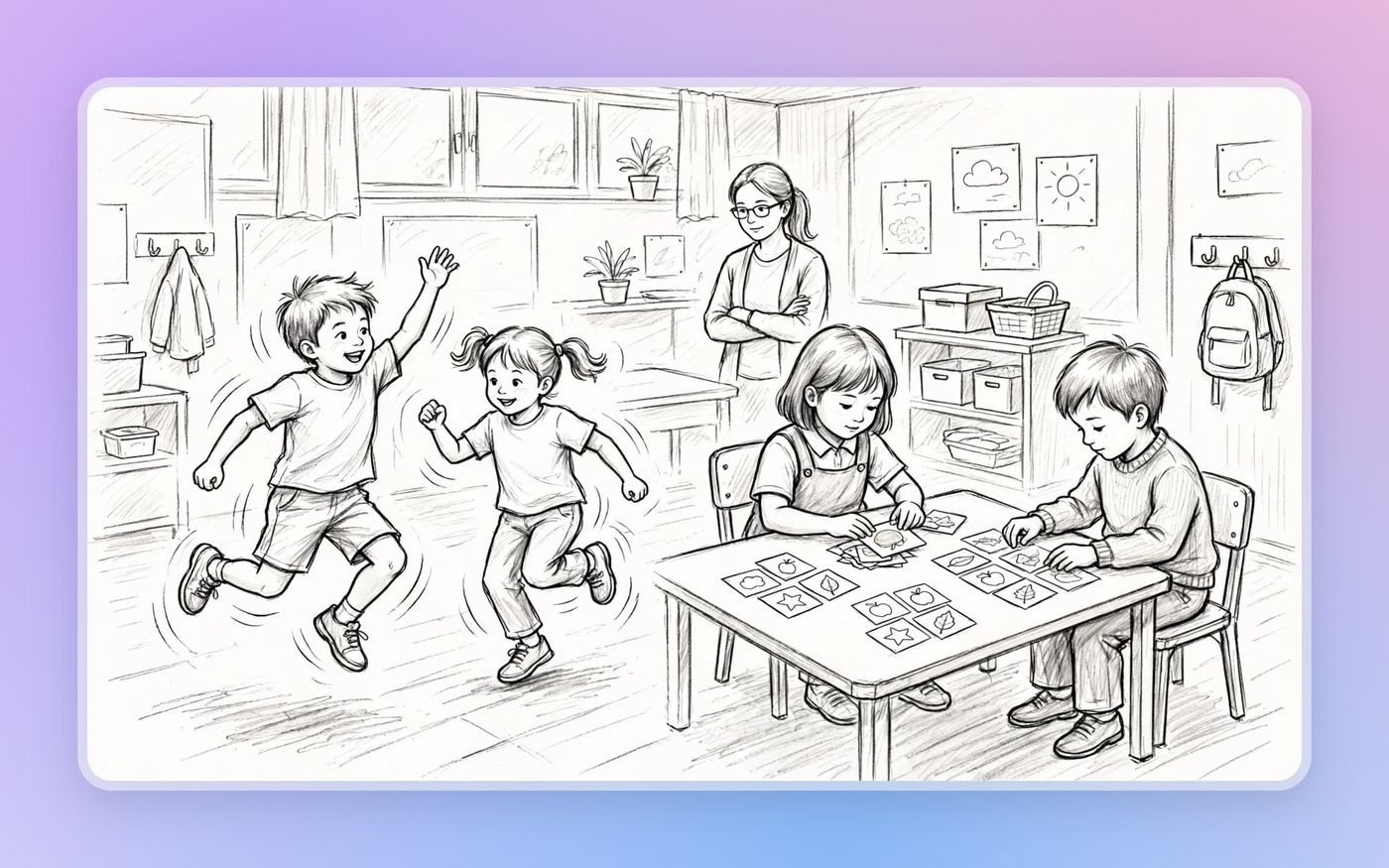
A short movement game can be followed by a calmer activity, with another brief game introduced afterward. This change of rhythm responds to younger children's attention spans without making one activity carry the whole lesson.
I avoid building an entire session around one extended game, even when it appears to be fun. The rhythm needs to give children different ways to participate while keeping language learning in view.
Make participation active and meaningful
Active participation gives children a role beyond listening and repeating. I want them to understand what I say, respond meaningfully, and have some influence over how the lesson develops. Listening comprehension and reading comprehension games give children a way to show understanding through a simple response or choice instead of only repeating my words.
This means paying attention to both sides of communication. Reducing teacher talk only helps when the language that remains is understandable and children have a genuine opportunity to answer.
I will explain a practical way to let children guide the lesson in a separate video about keeping kindergarten ESL students engaged. The principle remains the same: children need to participate in communication rather than simply reproduce the teacher's words.
For a structured approach to teaching this age group, my EIF Yellow Stage Teacher Training brings child development and young learner English teaching together.
Frequently Asked Questions
Why do English activities fail with children aged 4 to 8?
Some activities depend on reading, writing, working memory, or rule-following skills that younger children are still developing. Changing an activity's appearance doesn't change the skills children need to take part.
Should English lessons for young learners use games?
Games have a place in English lessons, but one long game can take up most of a lesson and limit children's chances to participate in different ways. Choose games with manageable rules, a clear language purpose, and little pressure to win.
Does repeating an English sentence mean a child understands it?
A child can remember and repeat a sentence as one fixed phrase without understanding its parts or recognizing another way to express the same meaning. Give children chances to understand language and respond to it meaningfully.
How can I keep young children involved in an English lesson?
Use brief, clear instructions and give children an active role in listening, understanding, and responding. Alternate short movement games with calmer activities, and offer different ways to participate, such as speaking, moving, drawing, or pointing.
Build lessons around understanding and capability
Fun and effective activities to teach English to kids work best when their demands match children's development and participation has meaning. I want children to leave an exchange feeling that they understood someone and were understood themselves.
That feeling of capability supports the desire to keep learning. With appropriate English activities for kids, a suitable rhythm, and meaningful communication, children have more reason to stay involved rather than burn out.
Happy teaching!